
Understanding growth through shopper segments
Shopper Sales: Why and how to analyze segment-level performance
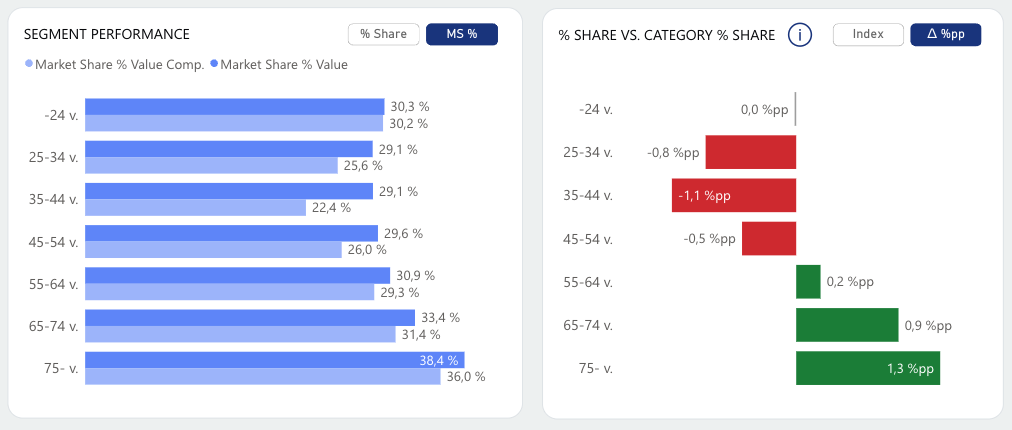
Analyzing your brand or portfolio through shopper segments helps move beyond averages and uncover real differences in performance. Combining segment-level sales with market share provides a clear view of your competitive position: High market share signals strong segments to defend, while sales highlights where your business is built.
The key is identifying gaps: segments with low share but high potential often represent the biggest growth opportunities. Looking at sales and share together also ensures that strong absolute sales are not mistaken for strong competitive performance. In practice, this helps identify where to defend, grow, and unlock untapped potential, grounding decisions in both scale and competitiveness.
Buying Behaviour: Understanding the drivers behind sales
While segment-level sales tells you where you stand, buying behaviour helps explain what is driving that performance. Sales is built from a few key components: how many category shoppers there are, how many of them you reach (own penetration), how often they buy, and how much they spend.
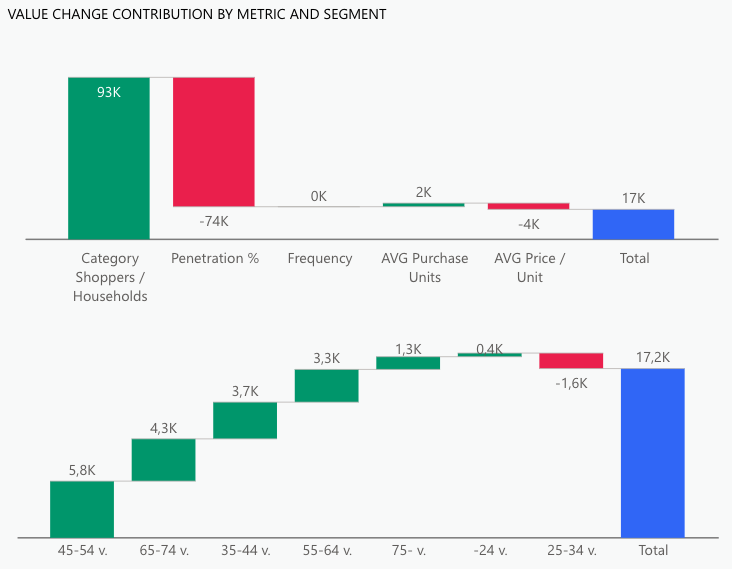
Growth can come from an increase in the total number of category buyers, or from improving your own penetration within those shoppers, in addition to driving higher purchase frequency or growing spend per purchase. Likewise, declining sales does not always mean losing customers, it may result from lower reach within the category, reduced frequency, or smaller basket sizes.
These dynamics often vary by segment. One segment may grow through broader reach, while another is driven by more frequent purchases or higher value per transaction. Without this level of understanding, it is easy to misread performance and focus on the wrong actions.
In many cases, expanding reach within category buyers is the most impactful growth lever, while in more mature segments frequency and spend become more important. Linking buying behaviour to sales performance enables more targeted actions, whether that means increasing reach, driving usage, or growing basket value, and highlights where your brand is present in shopper behaviour and where there is still room to grow.